What is Answer Engine Optimization, and why does it matter to B2B tech?
How buyers now build shortlists inside AI assistants, how AEO differs from SEO, and how to test your own visibility this week without buying a tool.
By Scott Clark · November 2, 2026 · 7 min read
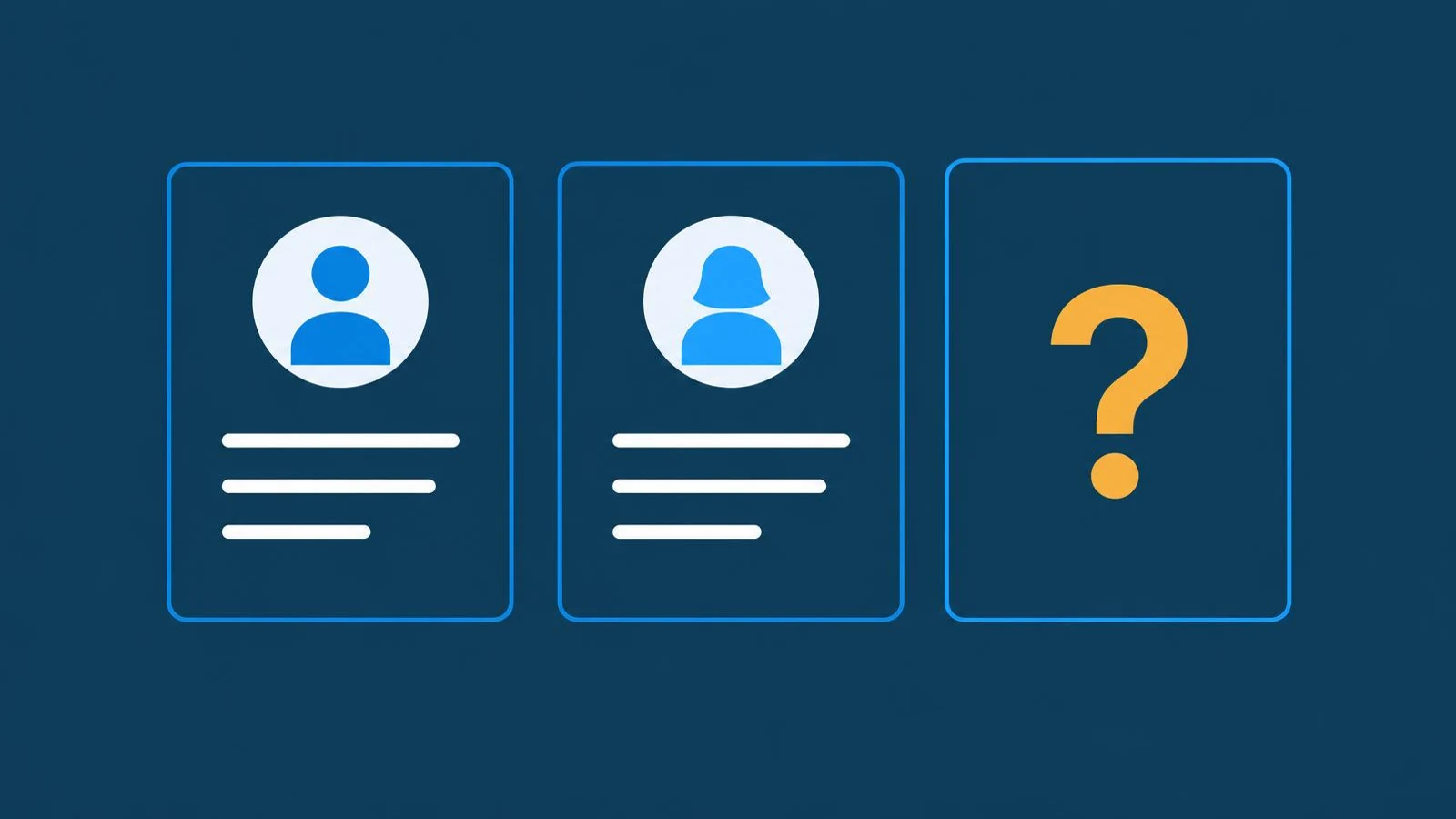
A VP of Sales needs a new data enrichment vendor. Instead of searching, she asks an AI assistant which tools suit her team. She gets a shortlist of five vendors, each with a one-line summary. Your company may not be on it, or it may be described using an outdated review.
Answer Engine Optimization (AEO) is the practice of making your company easy for AI assistants and AI-generated search answers to find, understand, trust and cite, so that when buyers ask questions about your category, your company appears in the answer and is described accurately.
That shortlist matters because it is assembled from sources you may not control: review sites, analyst write-ups, forum threads, partner directories, press coverage and, if you are lucky, your own website. AEO is the work of making sure those sources tell a consistent, current and accurate story, and that your own site gives clear answers to the questions buyers actually ask.
How is AEO different from SEO?
SEO is not going away. Buyers still use search engines, and many AI-generated answers are built on top of search results. The two disciplines share a foundation: pages that crawlers can access, content that is well structured, information that is accurate, and a reputation that other sites reinforce. If your SEO is solid, you already have a head start on AEO.
The differences come from how people use each tool and what they get back.
| SEO | AEO | |
|---|---|---|
| What success looks like | Ranking a page highly | Being mentioned, described accurately and cited in the answer |
| How buyers ask | Short keyword phrases | Full questions with context about their team, stack and budget |
| What buyers see | A list of links to click | A synthesized answer, often read without clicking through |
| Sources that shape the result | Mainly your pages and the sites linking to them | Your pages plus reviews, forums, directories and press, weighed together |
| How you measure it | Rankings, clicks and traffic | Mentions, accuracy, sources cited and AI referral traffic |
Consider the difference in practice. A search query might be "data enrichment tools." A question to an AI assistant is more likely to be "We're a 40-person sales team on HubSpot. Which data enrichment tools integrate natively and won't require a data engineer to maintain?" The assistant does not match keywords. It is trying to assemble an answer, and it favors sources that answer that kind of specific, contextual question directly.
What helps a company show up as a credible source?
Answer engines are trying to give a confident, accurate answer. They lean on sources that are accessible, consistent, specific, and corroborated by others. Six things make the biggest difference.
1. Make sure AI crawlers can read your site
The robots.txt file at the root of your domain tells crawlers what they may access. OpenAI, Anthropic and Google each document their crawlers and state that they respect robots.txt. Several providers separate the crawlers that collect training data from the ones that fetch pages to answer a live question, so you can make different choices for each. Review each provider's documentation and explicitly allow the crawlers you want.
Then check how your pages are built. Many AI crawlers read the raw HTML a server returns and do not run JavaScript the way a browser does. If your pricing, product or comparison pages load their content client-side, a crawler may see an almost empty page. Work with your development team or CMS to render your most important pages on the server or as static HTML.
2. Keep your company information consistent everywhere
Assistants compare what different sources say about you. If your website calls you a "revenue intelligence platform," your LinkedIn page says "sales engagement tool," and an old directory listing shows pricing you retired two years ago, the assistant has to guess. It may hedge, blend the descriptions or repeat the outdated one.
Audit the places your company is described: your website, LinkedIn, review site profiles, Crunchbase, integration marketplace listings, partner directories and your press boilerplate. Align your category, your one-sentence description, who you serve, your pricing model and your key integrations.
3. Answer real buyer questions clearly
Buyers ask assistants the same questions they ask your sales team. Pull them from call notes, demo requests and support tickets: What does it cost? Who is it for, and who is it not for? How does it compare to the main alternatives? What does it integrate with? How long does implementation take?
Answer them on your site in a format that is easy to extract. Use the question as the heading and give the answer in the first sentence, then add detail. Be specific: ranges, timeframes and named integrations are more useful than "flexible pricing" or "fast setup." Honest comparisons, including where you are not the best fit, read as more credible than one-sided claims. If you have original data, such as survey results or benchmarks from your own customer base, publish it. Information that cannot be found anywhere else gives an assistant a reason to cite you.
4. Earn third-party validation
Answer engines weigh what others say about you, not only what you say about yourself. Mentions in industry publications, analyst coverage, podcast appearances, customer case studies published on customers' own sites and genuine discussion in communities such as Reddit, YouTube and industry Slack groups all act as corroboration. Take part in those communities as a helpful practitioner rather than a promoter. Planted reviews and promotional posts tend to be spotted, and they can damage the credibility you are trying to build.
5. Keep your reviews current
A review profile with a dozen reviews from 2022 describes a product that may no longer exist. Assistants that draw on review sites will repeat whatever those reviews say, including complaints about features you have since fixed. Build a steady review request into your customer success process, ask at natural moments such as a successful launch or renewal, and respond to critical reviews with specifics about what changed.
6. Keep content fresh, and honest about it
Update pages when the facts change: pricing, packaging, integrations, leadership, customer counts. For evergreen articles, review them on a schedule and show a "last reviewed" date. Only change that date when someone has actually reviewed the page. A recent date on stale content creates the inconsistency you are trying to remove.
How can you test your AEO visibility this week?
You do not need to buy a tool to get a useful baseline. Set aside two hours and do the following.
- Write 10 to 15 questions your buyers actually ask. Mix category questions ("best data enrichment tools for a mid-market sales team"), comparison questions ("[your company] vs [competitor]") and direct questions ("how much does [your company] cost?").
- Ask each question in two or three AI assistants your buyers are likely to use. Use a fresh session, and log out where possible, so your own history does not skew the results.
- Record the results in a spreadsheet: whether you were mentioned, where you appeared in the list, whether the description was accurate, which sources were cited and which competitors appeared.
- Check your web analytics for referral traffic from AI assistant domains, so you have a starting point to compare against.
- Repeat the same questions monthly. As the practice matures, expand to a larger set covering more of the buyer journey.
Answers vary from one run to the next, so look for patterns rather than reacting to a single response. The "sources cited" column is usually the most useful. It shows which of your pages are being used, which third-party sites are shaping the answer, and where an outdated or inaccurate source needs attention.
What will AEO not solve?
AEO is worth doing, but it is not a cure-all. Be realistic about its limits.
- It will not fix unclear positioning. If buyers struggle to explain what you do, assistants will too. AEO amplifies a clear story; it cannot create one.
- It will not guarantee placement. Answers vary by phrasing, by user and over time. No one can promise you a fixed spot in an AI-generated answer, and you should be wary of anyone who does.
- It will not change what a model already knows overnight. Knowledge learned during training updates on each provider's schedule, and there is no reliable way to place your company into training data. What you can influence sooner is the content assistants retrieve when they search the web to answer a question.
- It will not hide real problems. If your reviews are negative for a good reason, AEO will surface that faster, not bury it.
- It will not replace your other channels. SEO, demand generation, outbound and sales still matter. AEO is a layer that helps buyers find and trust you during research, before they talk to anyone.
Where should you start?
Most B2B technology companies are closer to AEO-ready than they think. The fundamentals overlap with good SEO and good marketing: consistent messaging, clear answers to real questions and credible proof from others. The gap is usually in the details, such as a stale review profile, a JavaScript-heavy pricing page or three different descriptions of what the company does.
If you want to know how AI assistants describe your company today and what to fix first, request a free AEO assessment. To see how AEO fits into a broader go-to-market program, explore our GTMx Services and Marketing Services.
Request a Free AEO Assessment →
Frequently asked questions
What is Answer Engine Optimization (AEO)?
Answer Engine Optimization (AEO) is the practice of making your company easy for AI assistants and AI-generated search answers to find, understand, trust and cite, so that when buyers ask questions about your category, your company appears in the answer and is described accurately.
How is AEO different from SEO?
SEO focuses on ranking pages for short keyword phrases and is measured by rankings, clicks and traffic. AEO focuses on being mentioned, described accurately and cited when buyers ask AI assistants full, contextual questions. AI answers weigh your pages together with reviews, forums, directories and press. The two share a foundation of crawlable, well-structured, accurate content, so solid SEO gives you a head start on AEO.
Is SEO still important if buyers use AI assistants?
Yes. Buyers still use search engines, and many AI-generated answers are built on top of search results. AEO is a layer on top of SEO, not a replacement for it.
What helps a company get cited by AI assistants?
Six things make the biggest difference: letting AI crawlers read your site and rendering key pages as server-side or static HTML, keeping company information consistent across every source, answering real buyer questions clearly with the answer in the first sentence, earning third-party validation, keeping reviews current, and updating content honestly when the facts change.
How can I test my company's AEO visibility without buying a tool?
Write 10 to 15 questions your buyers actually ask, ask each one in two or three AI assistants in a fresh, logged-out session, and record whether you were mentioned, where you appeared, whether the description was accurate, which sources were cited and which competitors appeared. Check analytics for referral traffic from AI assistant domains and repeat the same questions monthly.
What will AEO not solve?
AEO will not fix unclear positioning, guarantee a fixed spot in AI-generated answers, change what a model learned in training overnight, hide real problems in your reviews, or replace SEO, demand generation, outbound and sales.
How do I get a free AEO assessment from MicroHalos?
Request a free AEO assessment at microhalos.com/contact. MicroHalos will show you how AI assistants describe your company today and what to fix first.
How do AI assistants describe your company today?
We'll run your buyers' real questions through the assistants they use, show you where you appear, how you're described and which sources shape the answer, and tell you what to fix first.
Request a Free AEO Assessment →Explore Marketing Services →