How Siemens partners can capture more of the opportunity in front of them
The pipeline is already there: stalled proposals, under-served customers, and good-fit accounts nobody has approached. One commercial system can work all of it.
By Scott Clark · November 4, 2026 · 6 min read
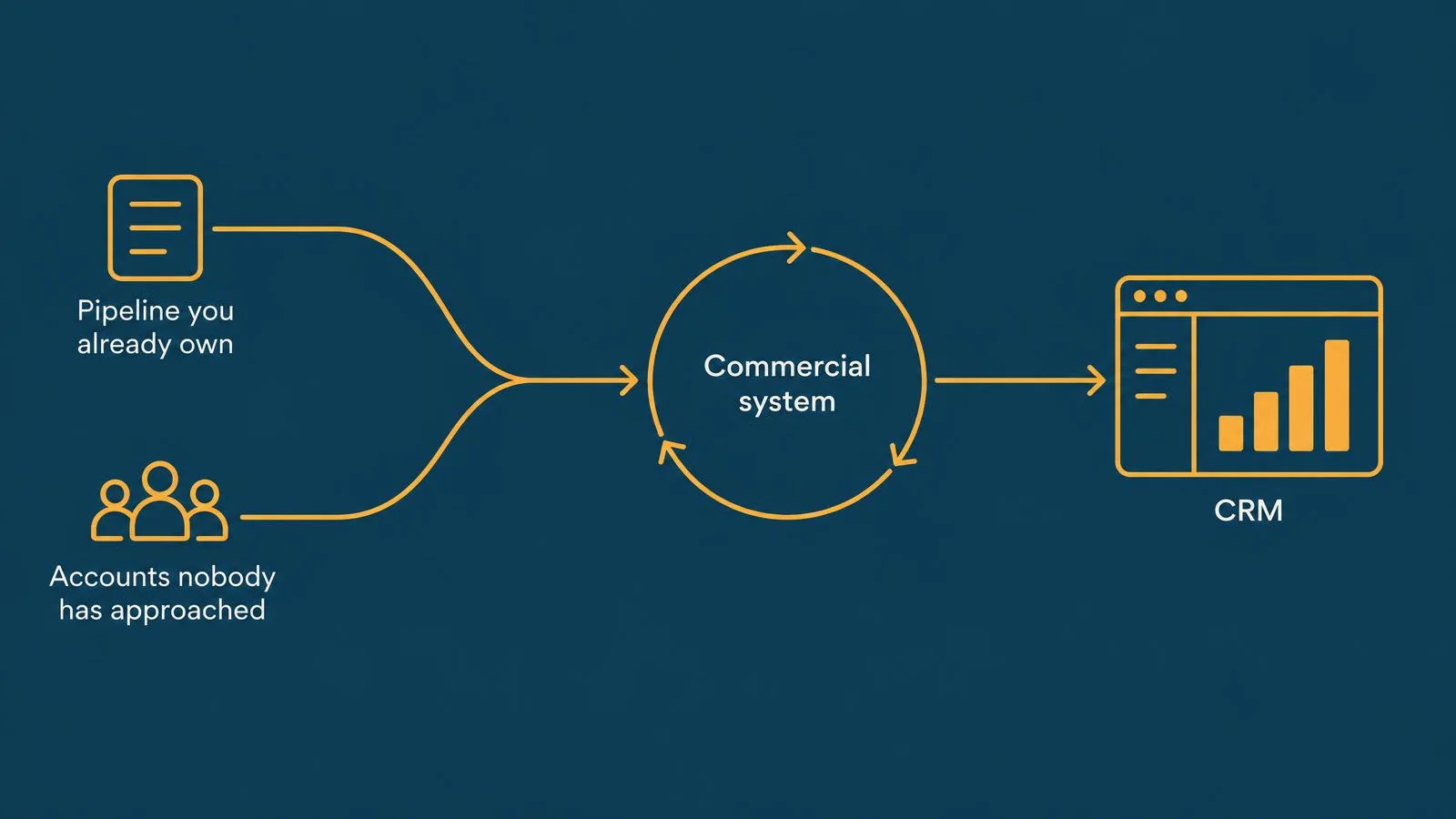
Siemens partners capture more of their opportunity by working what they already have more consistently. The deals that come through the Siemens relationship, the proposals that went quiet and the good-fit accounts in your territory are already there. Whether they turn into pipeline usually depends on who has time that week. A commercial system changes that: it defines who to approach before outreach starts, keeps follow-up moving when your team is busy delivering, and shows partner-sourced pipeline next to Siemens-sourced pipeline in your CRM.
Most partner teams I talk to are good at what they sell. Their best people sell, deliver and look after renewals, often all in the same week. When a big implementation heats up, prospecting is the first thing to stop. Three months later the pipeline is thin and everyone wonders why revenue arrives in peaks and valleys.
That pattern hides two opportunities.
Where is the pipeline you already own?
The first place to look is your own history. Every partner has a set of opportunities that never got a second conversation:
- Proposals that stalled when a champion left or a budget moved to next year.
- Deals that ended in "no decision" because the timing was wrong.
- Customers who bought software through you and were never offered training, implementation, data migration, or managed services.
- Opportunities that came through the Siemens relationship and got one follow-up call before the week got away from everyone.
None of these are cold. The buyer already knows who you are, and in many cases they've already seen your pricing. What changed is that nobody owned the next step.
We saw this clearly with an application development firm that had been in business for nearly twenty years. Sales had always been founder-led, and it worked until the company outgrew it. They had tried hiring experienced sellers, using appointment-setting firms and outsourcing marketing. Each attempt produced activity. None produced a system.
When we built their go-to-market engine, the highest-yield motion turned out to be the least glamorous one. We worked back through every finalist loss, every submitted proposal and every relationship that had gone quiet, and a dedicated BDR re-approached each contact. These people had received a proposal, and nobody had called them since. Alongside new outreach, the engagement produced around 30 net-new executive meetings, more than ten proposals and two to three closed deals, and former clients came back for new work.
Most teams already know they should revisit lost deals. Knowing it doesn't make it happen. A quarterly review of Closed-Lost opportunities is a good habit, but if no one owns the follow-up and there's no cadence behind it, the review produces a list and the list goes into a file.
What about the accounts in your territory nobody has approached?
The second opportunity is net-new: companies in your territory that fit what you do and have never heard from you. Usually the issue isn't fit. Your team hasn't had the time, and the accounts aren't connected to anyone's personal network.
Many partners grow through relationships, and relationships are a real asset. But a network runs out. The same application development firm had hired two experienced sellers largely for their contacts, and neither produced meetings at a meaningful rate once those contacts were worked through. The accounts nobody has approached are, almost by definition, the ones nobody on your team knows personally.
Reaching them takes targeting: deciding which accounts to approach, which people inside them, and when. Timing is where most outreach falls apart. A manufacturer is far more likely to take a conversation when something is changing, such as a new product introduction, a plant expansion, hiring for design or manufacturing engineers, a new leader in engineering or operations, or a customer requirement that their current tools can't support. Those are signals, and they can be tracked.
A publicly traded IT services firm we worked with had three vertical sales teams and almost no sourced pipeline. Growth came from referrals. In healthcare, we noticed that technology decisions often sat with physicians, and physicians publish. We filtered their articles, papers and podcasts into a targeted campaign built around what each buyer was already talking about. That team went from one qualified meeting in the four months before we started to 28 in the four months after, and a sourced cybersecurity engagement in the energy vertical closed and expanded into ongoing managed services.
Engineering buyers work the same way. They present at conferences, write for trade publications and talk publicly about the projects they're running. That's material your outreach can use.
What does a commercial system do for a partner?
A commercial system is the structure that makes both opportunities repeatable. At MicroHalos, we build it in three parts.
Targeting is defined before outreach starts. We build your Ideal Customer Profile from your own best wins: which industries, which company sizes, which Siemens solutions and services they bought and how the deal started. Then we define the personas and signals that matter for each. Outreach that starts without this is guesswork.
Follow-up keeps moving when the team is busy. Every opportunity has a named owner and a cadence across email, LinkedIn and phone. When a lead comes in through the Siemens relationship, it routes to a specific person with a clear response expectation. In our GTMx Services engagements, a dedicated BDR runs that cadence alongside your leadership team, so a heavy delivery month doesn't stop it.
Partner-sourced pipeline is visible next to Siemens-sourced pipeline in the CRM. Source fields, stage definitions and a dashboard your leadership actually uses. The IT services firm couldn't measure anything at first because its CRM couldn't capture the sales process it needed. Once that was fixed, they could see which motions produced pipeline and which didn't. For a Siemens partner, that view also makes FY27 business planning with your Partner Management Executive more concrete, because you can show where growth is coming from.
Why does the same system work for both opportunities?
Because both are the same problem. In each case, an account that should get a timely, relevant conversation doesn't get one.
The targeting that tells you which new accounts to approach also tells you which old proposals are worth reopening. The cadence that keeps a net-new conversation moving keeps a reheated one moving too. And the CRM view that shows partner-sourced pipeline shows recovered pipeline in the same place.
The two motions also help each other on timing. Reopening past proposals tends to produce conversations sooner, because those buyers already know you. Net-new outreach takes longer to build but keeps the pipeline full once the history has been worked. Running both from one system means you aren't choosing between a quick start and lasting growth.
When is this not the right first step?
If your delivery team is already at capacity and you're turning work away, more pipeline will make that worse. Fix delivery capacity first. And if you don't yet know which customers are most profitable for you, start with diagnosis before outreach. Our GTM Strategy and Diagnostics work is built for that situation.
How does this help Siemens and its partners together?
When a partner has a steady pipeline, more Siemens solutions reach more accounts. A reopened proposal or a new services conversation is often where the next software expansion starts. Growth on the partner side and growth for Siemens move in the same direction.
That's the idea behind the Partner Growth Marketplace at the Siemens Americas Partner Conference, November 17 to 19 in Orlando. Partners identify a priority in their FY27 plan, and their Partner Management Executive connects them with expertise that can help. We'll be there and are glad to talk through what you're seeing in your own pipeline.
If you're working through FY27 planning now, a GTM Assessment is a practical place to start. We'll look at your CRM history, your customer base and your territory, and show you where pipeline is already sitting and what it would take to work it consistently.
Frequently asked questions
How can Siemens partners capture more of the opportunity in front of them?
By working what they already have more consistently. Deals from the Siemens relationship, proposals that went quiet, and good-fit accounts in the territory are already there. A commercial system defines who to approach before outreach starts, keeps follow-up moving when the team is busy delivering, and shows partner-sourced pipeline next to Siemens-sourced pipeline in the CRM.
Where is the pipeline a Siemens partner already owns?
In its own history: proposals that stalled when a champion left or a budget moved, deals that ended in no decision, customers who bought software and were never offered training, implementation, data migration, or managed services, and opportunities from the Siemens relationship that got only one follow-up call.
How do partners reach accounts in their territory that nobody has approached?
Through targeting and timing. Decide which accounts to approach, which people inside them, and when. Manufacturers are more likely to take a conversation when something is changing, such as a new product introduction, a plant expansion, hiring for design or manufacturing engineers, a new engineering or operations leader, or a customer requirement their current tools can't support.
What does a commercial system do for a Siemens partner?
It makes pipeline repeatable in three parts: an Ideal Customer Profile, personas, and signals defined from the partner's own best wins before outreach starts; follow-up with a named owner and a cadence across email, LinkedIn, and phone; and CRM source fields, stage definitions, and a dashboard that show partner-sourced pipeline next to Siemens-sourced pipeline.
When is a commercial system not the right first step?
When the delivery team is already at capacity and turning work away, because more pipeline makes that worse. And when a partner doesn't yet know which customers are most profitable, it should start with diagnosis, such as MicroHalos GTM Strategy and Diagnostics, before outreach.
How do I get started?
Request a GTM Assessment at microhalos.com/contact. MicroHalos reviews your CRM history, customer base, and territory and shows where pipeline is already sitting and what it would take to work it consistently. MicroHalos is also in the Partner Growth Marketplace at the Siemens Americas Partner Conference, November 17 to 19, 2026, in Orlando.